 Register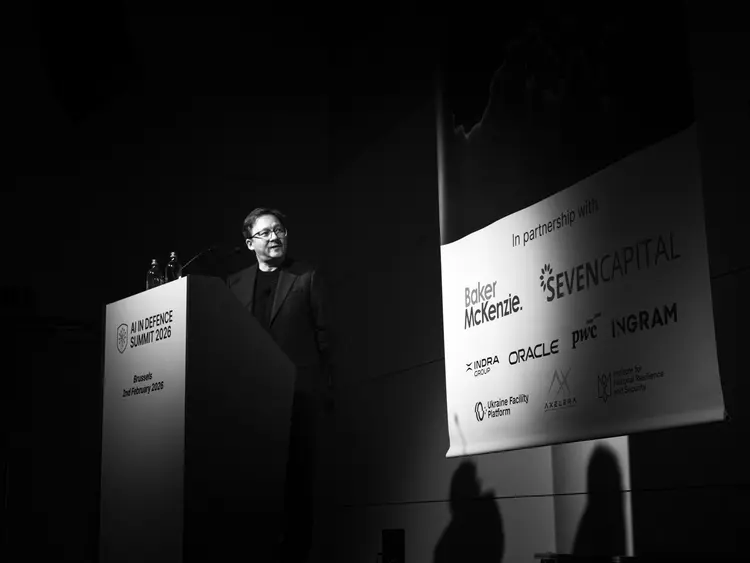
NATO AI Certification Standards: What European Defence Technology Must Demonstrate
NATO's AI principles and emerging certification standards are reshaping what European defence AI must demonstrate. A guide for developers, primes, and procurement officials building toward NATO compatibility.
NATO adopted its AI principles in 2021, the first military alliance to do so. What began as a set of responsible use commitments is evolving into a practical certification and interoperability framework that shapes what European defence AI must demonstrate to operate within Alliance systems. For companies building in this space, understanding what NATO requires, and where the standards are still being formed, is increasingly the difference between systems that can be integrated into Alliance procurement and those that cannot.
NATO's Six AI Principles: From Declaration to Practice
The six principles adopted at the 2021 Brussels Summit (lawfulness, responsibility and accountability, explainability and traceability, reliability, governability and auditability, and bias mitigation) were framed as aspirations at the time of adoption. They are becoming operational requirements.
Lawfulness means compliance with international law, including international humanitarian law, in the design and use of AI systems. For AI systems involved in targeting, surveillance, or autonomous decision-making, this requires documented legal analysis of the system's behaviour across its intended operational scenarios. Companies building in these areas need legal counsel with IHL expertise, not just technology law.
Responsibility and accountability means maintaining clear human accountability for decisions made with AI assistance. This shapes system design: any architecture that makes it unclear who bears responsibility for an AI-assisted decision will face adoption barriers within Alliance structures. The requirement is for traceable decision chains, not just outcome monitoring.
Explainability and traceability is where many current AI systems struggle most. Deep learning systems, the foundation of most leading computer vision, language, and signal processing AI, are inherently difficult to explain at the decision level. NATO's requirement is not that every decision be explainable in natural language, but that the system's behaviour be traceable, auditable, and reproducible. This has direct implications for model architecture, logging, and testing documentation.
Reliability means consistent performance within specified operational parameters, with documented failure modes and degradation behaviour. Defence procurement requires not just that a system performs well in a test environment but that its performance is predictable and its limitations are known and documented.
Governability and auditability means that Alliance command structures can monitor, adjust, and if necessary disable AI systems operating within their infrastructure. For third-party software vendors, this means providing administrative controls, audit logs, and kill-switch mechanisms that meet NATO specifications.
Bias mitigation, in the context of defence AI, addresses the risk that AI systems trained on historical data may systematically misclassify objects, individuals, or situations in ways that correlate with characteristics of the training data. This is particularly relevant for target identification, threat assessment, and biometric systems operating across diverse operational environments.
The DIANA Programme and What It Signals
NATO's Defence Innovation Accelerator for the North Atlantic (DIANA) is more than an accelerator. It is a credentialing mechanism. Acceptance into DIANA signals to Alliance member state procurement officials that a company and its technology have been evaluated against NATO's standards and found to be a credible candidate for Alliance procurement.
The practical implication is significant. European defence AI startups that invest in the DIANA application process, and the technical and documentation preparation it requires, are not just competing for acceleration support. They are positioning their company within the Alliance procurement ecosystem in a way that opens doors that are otherwise difficult to access, particularly in the larger NATO member states where the procurement bureaucracy is most formidable.
DIANA's challenge areas are also a direct statement of what NATO considers its priority capability gaps. Companies that align their development roadmap with DIANA challenge areas are building toward documented demand, which matters enormously for investor confidence and for the commercial case for dual-use development strategies.
The NATO Innovation Fund, which backs deep tech companies across DIANA challenge areas, is the capital mechanism that sits alongside the accelerator. The Fund's portfolio strategy, focused on dual-use technologies with both commercial and defence applications, reflects a deliberate effort to build a sustainable European deep tech defence ecosystem rather than solely subsidising companies that cannot compete commercially.
Interoperability Standards: The Technical Reality
STANAG (Standardisation Agreement) standards are NATO's technical interoperability framework. For AI systems, the relevant STANAGs are still being developed, the pace of AI development has outrun the standardisation process, but the direction of travel is clear. Systems that will operate within NATO's command, control, and communications infrastructure must demonstrate compatibility with existing STANAG data formats, communication protocols, and security standards.
The NIAG (NATO Industrial Advisory Group) is the primary mechanism through which the defence industrial base engages with the development of Alliance standards. NIAG participation, available to companies meeting eligibility criteria, provides early visibility into the technical requirements that will eventually become mandatory, which is a significant competitive advantage.
For AI systems specifically, the emerging technical requirements centre on three areas: data format interoperability (the ability to ingest and output data in formats that Alliance systems can process); security and cryptographic standards (the specific encryption and authentication requirements for AI systems handling classified data); and operational interface standards (the APIs, dashboards, and human-machine interfaces that allow Alliance operators to interact with AI systems without requiring system-specific training).
The Unclassified Demand Signal: What the Ankara Summit Means for Startups
The document being prepared for the Ankara Summit represents a fundamental change in how NATO communicates its capability requirements to the commercial sector. Currently, the most specific descriptions of what Alliance forces need are classified, inaccessible to companies without security clearances and therefore unavailable to most of the commercial sector that could be building solutions.
At the 2026 AI in Defence Summit, this unclassified demand signal process was described as one of the most consequential institutional innovations NATO is attempting. By describing defence capability challenges in terms that do not reveal classified operational details (the problem to be solved, not the specific capability gap), NATO creates a document that any company can respond to, from early-stage startups to established primes.
For European defence AI startups, the practical implication is to monitor the Ankara process closely and be prepared to respond quickly when the document is released. Companies that have invested in NATO-alignment (DIANA participation, STANAG awareness, Alliance-compatible documentation practices) will be best positioned to convert the demand signal into procurement conversations.
How European Companies Are Preparing
The most practically prepared European defence AI companies are taking a multi-track approach to NATO alignment. On the technical side: STANAG awareness built into development roadmaps, security architecture designed to meet Alliance requirements from the outset rather than retrofitted later, and logging and auditability infrastructure that can meet NATO's traceability requirements.
On the institutional side: DIANA engagement (whether as a cohort participant or as a company tracking the programme's challenge areas); national defence innovation office relationships in the member states most actively building defence AI procurement pipelines; and legal counsel with specific NATO procurement and ITAR/EAR export control expertise.
The companies that are furthest ahead have also invested in the relationships that procurement operates through. Alliance procurement does not happen through RFPs alone. It happens through demonstrated credibility built over time with procurement officials, through operational testing in realistic environments, and through the kind of institutional trust that takes years to develop. Starting that relationship-building now, before the procurement conversation is formally open, is the most important strategic investment available to European defence AI companies at this stage.
What 2027 Brings
NATO's AI governance framework is still being formed. The 2027 Summit's NATO-linked sessions will address the evolving certification landscape: specifically how the principles adopted in 2021 are being translated into procurement requirements, what the DIANA programme's first full cohort cycle has revealed about what European companies can and cannot yet demonstrate, and how the unclassified demand signal process is changing the relationship between Alliance headquarters and the commercial sector.
The session will also address the specific challenge of AI systems operating across Alliance members with different national AI governance frameworks: the interoperability not just of technology but of regulatory environments that the next phase of NATO AI integration requires.
See also: