 Register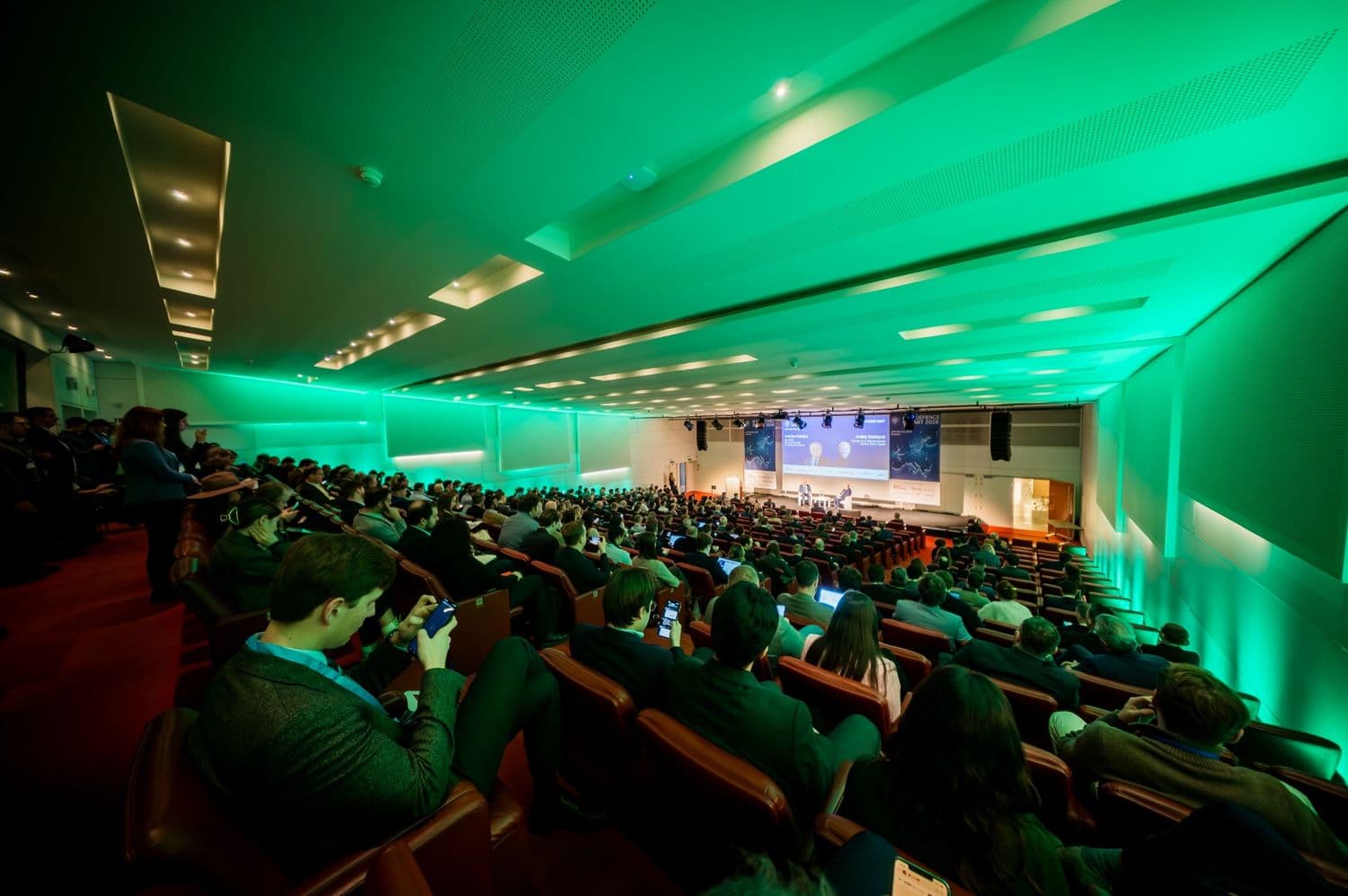
The Procurement Gap: Why European Defence AI Stalls Between Invention and Deployment
Europe's defence AI ecosystem has a recognisable failure mode: capability is built, then the process stalls. At the 2026 summit, policymakers, founders, and operators laid out why, and what the emerging instruments to fix it actually require.
The European defence AI ecosystem has a characteristic failure mode that practitioners on both sides of the procurement table recognise immediately. A company develops a capable technology: a detection system, a signal intelligence tool, an autonomous guidance module, a cybersecurity AI. The technology is tested, validated in controlled conditions, and demonstrated to potential buyers. Then the process stalls.
Procurement timelines stretch into years. Requirements documents are written by people who do not fully understand what is technically possible. Buyers who are interested cannot move at the speed the technology requires to remain current. By the time a contract is awarded, the product has been iterated four times over, and the procurement is already partially obsolete. Meanwhile, the company has spent its development capital waiting.
This dynamic was described from multiple angles at the 2026 AI in Defence Summit, by policymakers, by founders, and by the military operators who represent the end users of the technologies being developed.
The Dual-Use Framing Problem
Linas Paul Snacks, Member of the European Parliament from Latvia and author of a parliamentary report on drones and new systems of warfare, made a point that reframed the structural issue. The concept of dual use, technology that has both civil and military applications, was introduced during the Cold War as a mechanism to control the export of sensitive technologies to adversaries. It was a tool for protecting Western advantage.
His argument was that the dual-use framing has inverted its function. Originally designed to prevent adversaries from accessing sensitive technology, it now functions primarily as a barrier preventing civilian innovation from entering European defence procurement. The most capable AI systems being developed today, whether in computer vision, language models, autonomous navigation, or signal processing, are being built in the commercial sector. Defence procurement systems that treat these as categorically different from military technology are systematically disadvantaging themselves.
What Innovators Need from Policymakers
Ignacio Montiel Sanchez, working on AI integration at the European Commission's Defence Industry and Space directorate, described the instruments that now exist to close the procurement gap: the European Defence Fund, the transition programmes that preceded it, the upcoming European Defence Industrial Programme (EDIP), and the recently launched European Industry Defence Transformation Roadmap, which targets integration cycles of six months to one year for emerging technologies.
The roadmap is designed to do in six months what traditional European procurement processes take years to accomplish, specifically by building direct links between the defence community and the deep tech ecosystem and requiring agile procurement approaches that can move at the speed of the technology.
But Giedrimas Jeglinskas, former Deputy Defence Minister of Lithuania and Senior Fellow at the Atlantic Council, offered a direct assessment of the gap between these instruments and the political reality they have to navigate. His point was not that the instruments are insufficient. It was that instruments require political will to use at speed, and that the European habit of individual national efforts where joint efforts are required is slowing down the integration of AI capability in ways that the funding instruments alone cannot correct.
The Customer Intimacy Problem
Adrian, representing a European cybersecurity AI company, introduced a concept from the commercial technology sector that applies with particular force in defence AI: customer intimacy. The idea is that AI systems improve through access to the data of the users who deploy them. You cannot build a good AI model for a problem you do not have continuous access to.
In defence, the end users are military operators. Their data is classified: the signals, the communications intercepts, the imagery, the operational logs. A company developing AI for defence that cannot work directly with military users and their actual data is developing against a specification that is always out of date and always incomplete.
The structural response to this problem is one of the things that European procurement reform is trying to create: procurement models that allow companies to embed with military units during development, field testing frameworks that give innovators access to operational environments, data sharing agreements that make defence data available under appropriate security controls. Ukraine's defence innovation ecosystem is the most advanced example of what it looks like when this loop is working: companies embedded with units, iterations measured in weeks, direct feedback from operators in the field.
The Demand Loop
Alberto's contribution to this discussion identified what he called the demand loop as the core problem to solve. European defence AI investment, both public and private, is constrained by the absence of a clear, consistent demand signal from European public administrations about what they actually need, at what scale, and under what conditions.
Without that demand signal, companies cannot build investor cases that justify the capital required to compete at scale. Without investor cases, the capital does not flow. Without the capital, the products do not get built at the speed and quality the market requires. The procurement gap is, at its root, a demand signalling gap.
The unclassified demand signal that NATO's Innovation Directorate is preparing for the Ankara Summit is one concrete response to this problem: a document that describes defence challenges in an unclassified manner, without prescribing specific capability targets, so that innovators can understand what is needed without requiring security clearances. It does not solve it. But it demonstrates the kind of institutional mechanism that could, at scale, begin to change the dynamic.
What 2027 Will Address
The procurement session at the 2027 AI in Defence Summit will focus on the specific instruments now in place, namely EDF, EDIP, the Safe programme lending windows and national defence innovation funds, and on the practical question of how to use them at speed. The session will bring together the policymakers designing the instruments, the founders building for them, and the institutional buyers who need to accelerate adoption.
The benchmark, as Andrew Koloduk set it in his opening remarks at the 2026 summit, is the right one: at the next edition, we should not be repeating the same conversations. We should be measuring the results achieved together.