 Register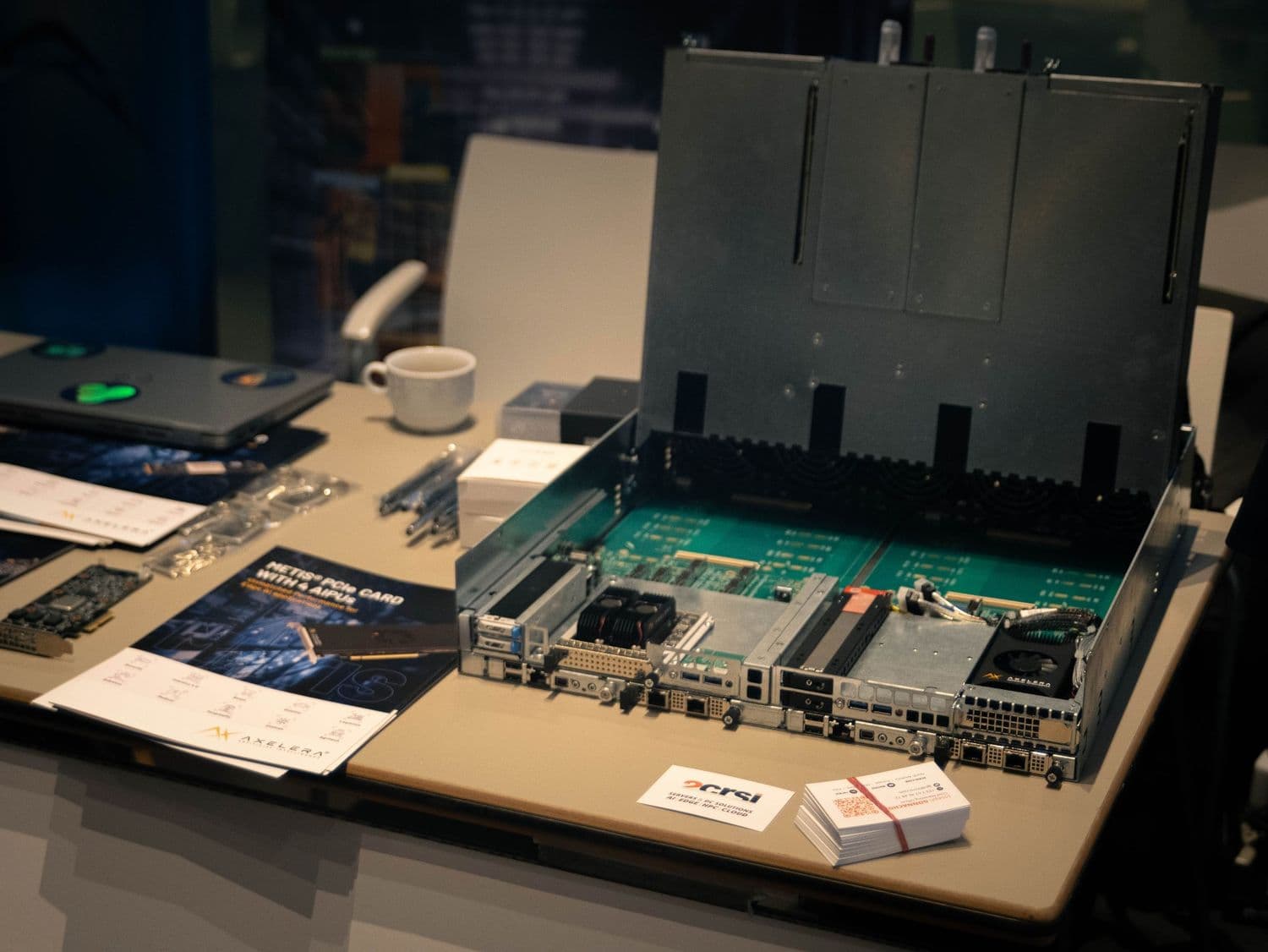
What Sovereign AI Actually Means: The Hardware Question Europe Cannot Defer
Sovereign AI is a widely used term that is rarely defined with precision. At the 2026 summit, a panel of hardware manufacturers and infrastructure providers forced the conversation past the rhetoric and into the specific vulnerabilities.
The term sovereign AI has been used frequently enough in European policy discussions that it risks losing its meaning. At the 2026 AI in Defence Summit, a panel dedicated to AI sovereignty and European hardware infrastructure forced the conversation past the conceptual level and into the specific decisions and structural vulnerabilities that define what sovereignty actually requires.
The panel brought together hardware manufacturers, cloud infrastructure providers, and policy specialists. The discussion was notable for its directness about what Europe has and has not yet built, and about the gap between the strategic aspiration for AI sovereignty and the practical decisions required to achieve it.
The Foundational Constraint
Alberto, representing a major European cloud infrastructure provider, opened with an argument that ran against the grain of most European AI policy rhetoric. He suggested that the frequency with which European institutions feel the need to define sovereignty is itself a diagnostic.
His point was not that sovereignty does not matter. It was that until public administrations, meaning defence ministries, EU institutions, and member state governments, articulate clearly what they need sovereign control over and why, the technology sector cannot build to a specification. The risk is building expensive European infrastructure that addresses the wrong problems and fails to create the operational independence that actually matters.
He identified eight specific areas of sovereignty control in a framework document released in October 2025 as the first serious attempt to move from definition to specification. His assessment was that this was a beginning, not a solution.
The Chip Question
Jean, CEO of Axelra, a European AI inference chip manufacturer, described the infrastructure layer of the sovereignty problem with precision. The fundamental issue is that the AI inference layer, the compute required to run AI models in production, is almost entirely dependent on NVIDIA GPUs.
Axelra's value proposition is a European inference chip: lower cost, more power-efficient than GPU-based inference for the majority of production AI workloads. The company is funded, has production redundancy through TSMC and Samsung, and has been operating for four years. Most organisations in the room had not heard of it.
The broader point he made was about Taiwan. If China were to move against Taiwan, the source of the most advanced semiconductor fabrication in the world, the US would face serious supply chain disruption. Europe, which is even more dependent on Taiwanese fabrication capacity, would face an existential one.
His call to action was for European family offices and institutional investors to redirect capital that is currently flowing into US hyperscalers toward European semiconductor and hardware infrastructure. The argument is not protectionist. It is about whether the compounding returns of the AI era, which he described as the fourth industrial revolution, will accrue to European economies or be transferred abroad by European investors funding foreign platforms.
The Hyperscaler Question
Alberto's position on European cloud sovereignty was notably pragmatic. He argued directly that building a European competitor to Amazon Web Services or Microsoft Azure is not feasible at the required scale, since the investment required to replicate what the hyperscalers have built is beyond what European institutions can mobilise, and that the goal of sovereignty should therefore be more precisely defined.
His argument was that sovereignty does not require controlling the entire cloud infrastructure stack. It requires identifying the specific workloads, the 20 percent of applications where data sovereignty, operational independence, and the ability to function in a degraded connectivity environment actually matter for defence and security, and building or procuring European-controlled infrastructure for those. The remaining 80 percent can run on hyperscalers under appropriate contractual and technical controls.
The hyperscalers, he noted, have moved significantly on sovereignty in the past two years. Two years ago, the response to European sovereignty requirements was to open an office in Germany. Now there are meaningful commitments to data residency, processing location, and operational autonomy under specific conditions. This does not resolve the sovereignty question, but it changes the nature of the trade-off.
The Airbus Model
Adrian, representing a European cybersecurity AI company, offered the Airbus comparison that recurred across several conversations during the day. Airbus is a policy-driven industrial consolidation: a European response to American dominance in commercial aviation that required political will, cross-border collaboration, and sustained state support. It worked.
His argument was that European AI hardware and cloud infrastructure may require the same kind of deliberate industrial policy, not leaving the outcome to market competition between companies that cannot individually match the scale of US or Chinese investment. The EU has instruments for this: the European Defence Fund, EDIP, the AI continent strategy, the gigafactory programme. The question is whether the political will exists to use them at the speed and scale that the situation requires.
The panel's closing round produced a consistent message. Move from strategy to execution. Stop defining sovereignty and start specifying what European institutions actually need to control and why. Build demand from the public sector that justifies the investment required on the supply side. Use the window that currently exists before it narrows: the ReArm Europe commitment, the new funding instruments, the post-Trump urgency.
Hardware is one of the nine core topics of the 2027 AI in Defence Summit. The session will bring together hardware developers, cloud infrastructure providers, investors, and policymakers to work through what the transition from strategy to execution actually requires.