 Register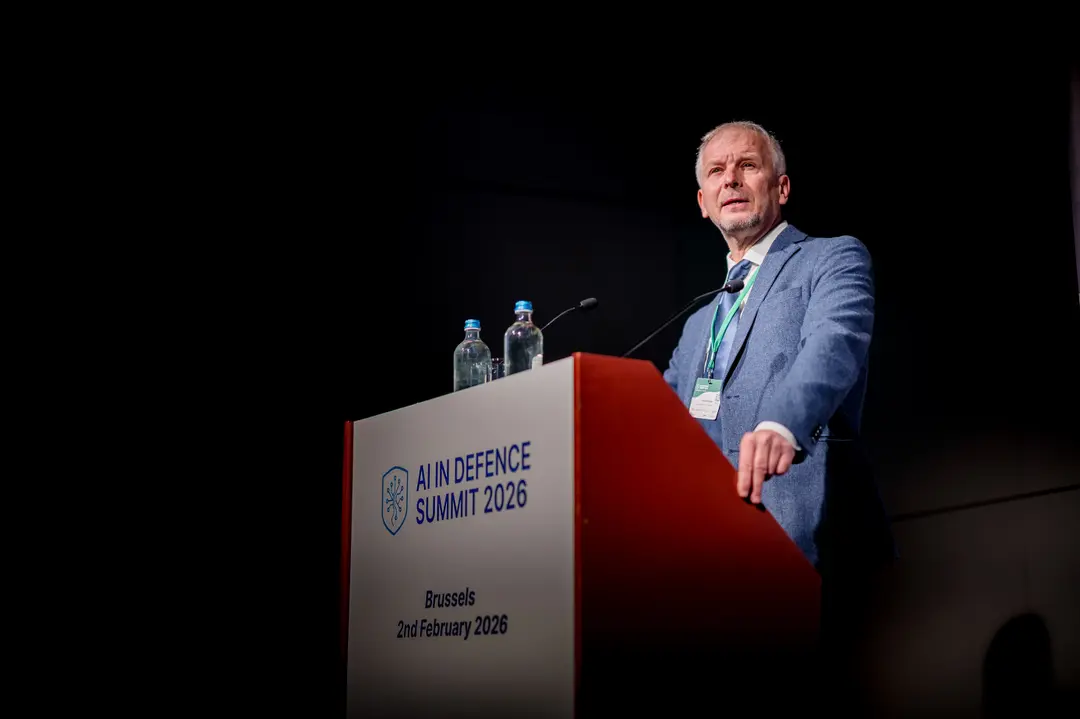
European Defence Fund and EDIP: A Practical Guide for Defence AI Founders and Investors
How to access the European Defence Fund (EDF) and EDIP for AI and deep tech startups. A practical guide to application strategy, consortium requirements, eligible activities, and what procurement officials are actually buying.
The European Defence Fund and its successor programme EDIP (European Defence Industrial Programme) represent the EU's primary instruments for funding collaborative defence capability development. For AI-native defence companies, they are simultaneously the most significant public funding opportunity in European history and one of the most complex application processes any startup will encounter. This guide makes them navigable, covering what each programme actually funds, who can apply, how the application process works, and what the realistic outcome looks like for an AI company at different stages of development.
EDF: What It Is and What It Isn't
The most important frame for approaching the European Defence Fund correctly is understanding what it is designed to fund: collaborative research and development of defence capabilities across EU member states. It is not a procurement programme, not a grant-for-existing-products, and not a subsidy for company operations. It is a co-funded R&D instrument.
This distinction has direct implications for how companies should approach EDF. A company that applies to EDF with a mature product seeking market validation support is applying to the wrong programme. A company that applies to EDF with a technology at Technology Readiness Level (TRL) 3–6, demonstrated in a laboratory, not yet validated in an operational environment, seeking co-funding to develop it toward operational capability, within a multi-national consortium, is applying in the right spirit.
EDF's design reflects a specific theory of change: that European defence AI capability gaps exist not primarily because the technology does not exist, but because the collaborative development and standardisation required to make that technology interoperable across Alliance members has not happened. EDF is designed to fund that collaboration: the consortium-building, the common standards development, the multi-environment testing, and the early-stage procurement pathway development that turns national research outputs into European capability.
Who Can Apply: Eligibility, Ownership, and Control
EDF eligibility requirements are designed to ensure that the fund supports genuine European industrial capacity, not European subsidiaries of non-European companies that repatriate the resulting IP and capability.
Entity registration: Applicants must be legal entities established in EU member states or EDF-associated countries (which includes some non-EU states that have concluded association agreements). Post-Brexit, UK entities are not eligible.
Ownership and control: This is the most complex and frequently problematic eligibility dimension. EDF requires that applicants are not controlled by non-EU entities or individuals in a way that poses security risks. Companies with significant non-EU investment, particularly investment from US or Chinese funds, need to analyse their ownership structure carefully before applying. A company where a US venture fund holds a controlling stake may face eligibility challenges, even if the company is incorporated in France and staffed entirely by European nationals.
Third-country exclusions: Certain third-country entities are explicitly excluded from participation, and the list evolves. Companies with significant supply chain dependencies on excluded entities also face scrutiny.
Consortium composition: Most EDF calls require a minimum of three legal entities from three different member states. The consortium must include at least two entities that are not subsidiaries of the same parent. SME inclusion, while not always mandatory, is incentivised through bonus evaluation criteria and specific SME-focused call types.
Prime contractor vs. subcontractor: The prime contractor leads the consortium, manages the grant agreement, bears primary responsibility for delivery, and typically owns the consortium IP coordination role. Subcontractors contribute specific work packages, receive subcontract revenue from the prime, and may have different IP arrangements. For startups, the subcontractor route is typically more accessible, and sometimes more commercially valuable, than leading a consortium.
The Call Architecture: Topics, Budgets, and Timelines
EDF operates through annual or biennial work programmes that define the specific capability gaps and research themes to be addressed. Each work programme includes multiple "calls": open competitions for funding against specific topics. The topics are typically drawn from the European Defence Agency's Capability Development Plan and updated based on member state priority assessments.
AI-relevant topics in recent EDF work programmes have included: autonomous systems for land and maritime operations; AI-enabled ISR data processing and sensor fusion; AI for command, control, and communications; cybersecurity AI for critical infrastructure; and counter-UAS detection and classification systems. The specific call topics change between work programmes, and companies should monitor the EDF website for upcoming calls relevant to their technology.
The realistic timeline from call publication to funding decision is 12–18 months. Call publication is followed by a submission deadline (typically 4–6 months), an evaluation period (3–6 months), negotiation and grant agreement signature (3–6 months), and project start. Companies should plan for grant expenditure to begin no earlier than 18 months after call publication, and should have bridge financing in place to sustain operations through the evaluation and negotiation period.
Writing a Winning Application: What Evaluators Look For
EDF evaluation uses a multi-criteria assessment framework, but experienced applicants consistently identify four factors that distinguish successful from unsuccessful proposals:
Operational relevance. The most common failure mode in EDF applications from technology companies is insufficient engagement with the military problem being solved. Evaluators are looking for evidence that the proposed technology addresses a documented capability gap, one that member states have identified and communicated through official processes. Applications that lead with technology capability and treat the military use case as secondary are consistently disadvantaged. The right approach is to start with the capability gap and demonstrate that the proposed technology is the most effective way to close it.
Technological maturity. EDF gates its calls by TRL: research phase calls target TRL 2–4, development phase calls target TRL 4–7. Applying to a development phase call with a technology at TRL 2 will result in rejection. Accurately assessing and communicating your technology's TRL, and demonstrating the work plan that will advance it to the required level within the project, is fundamental.
Consortium balance. EDF evaluators assess whether the consortium brings together the right combination of national industrial bases, research institutions, and user community representation. A consortium of three entities from the same country (which is not permitted) or from countries that are not the primary users of the technology being developed is disadvantaged. Investing time in building a consortium with genuine geographic spread, complementary competencies, and at least one end-user representation (military institution, defence agency, or ministry) significantly improves evaluation scores.
Budget justification. EDF grants are typically 70–100% of eligible costs, with cost-share requirements varying by call type. Budgets must be justified at the level of work package, with clear linkage between activities, personnel, and costs. Vague or inflated budgets are a reliable disqualifier.
EDIP: The Transition From Research to Industry
EDIP (European Defence Industrial Programme) addresses the gap that EDF leaves open: the transition from developed capability to market-ready product and procurement. While EDF funds R&D, EDIP targets the production and procurement phase: specifically, the support required to ramp production capacity, navigate procurement processes, and close the gap between a validated technology and a signed defence contract.
For AI companies, EDIP's most relevant instruments are:
Production support grants: co-funding for investments in production infrastructure required to deliver at the volume and quality level that defence procurement requires. For software AI companies, this may translate to investment in the secure computing infrastructure, testing environments, and quality management systems that defence certification requires.
Procurement bridges: financial instruments that allow companies to invest in delivery capacity ahead of a confirmed procurement contract, with EDIP support de-risking the investment. This is the most impactful EDIP instrument for companies that have validated technology and a visible procurement pipeline but cannot afford to scale ahead of contract signature.
Joint procurement facilitation: mechanisms that support member states in conducting joint procurement of common capabilities, reducing the procurement burden on individual nations and creating larger, more commercially viable contract opportunities for suppliers.
EDIP's AI-relevant priority areas are determined by the capability gaps that member states collectively identify as highest priority. Companies that have been through an EDF development phase, and have therefore already developed relationships with member state procurement officials and demonstrated operational relevance, are significantly better positioned to access EDIP support than companies approaching the EU procurement ecosystem for the first time.
Combining EDF/EDIP With National Programmes and VC
Most successful European defence AI funding strategies involve stacking multiple instruments rather than relying on any single source. The combination typically works as follows: national grant funding (France's RAPID, Germany's ZIM, DSTL in the UK for pre-commercial arrangements) provides early-stage non-dilutive capital; EDF consortium participation provides co-funded R&D support and institutional relationship-building; VC investment provides the equity capital and commercial acceleration that grant funding cannot; EDIP and SAFE instruments provide the growth capital required for procurement-phase scaling.
The state aid rules that govern this combination are complex. EDF grants are generally not considered state aid under EU law, as they fund specific collaborative research rather than commercial operations. National grants are subject to state aid analysis. The combination of grant and equity capital requires care around the specific state aid rules that apply to each instrument.
The practical guidance is to engage legal counsel with specific expertise in EU defence funding and state aid from early in the funding strategy development process. The penalties for inadvertent state aid violations are significant, and the rules are sufficiently complex that general commercial legal advice is insufficient.
What the 2027 Summit's Policy Track Will Cover on Procurement
The procurement session at the 2027 AI in Defence Summit will bring together EDF programme managers, EDIP architects, and founders who have successfully navigated both systems. The specific questions on the agenda reflect where the current friction is: the consortium formation process and whether the minimum requirements serve the programme's goals or primarily create administrative overhead; the evaluation timeline and whether 12–18 months from call to decision is compatible with the pace of AI development; and the IP framework within EDF consortia, which remains a source of significant tension between primes and SMEs.
The session will also address the specific challenge of AI companies whose technology iterates faster than the EDF project cycle, where a three-year development project funded under a 2024 call may be addressing a problem that the technology has already partially solved by 2027. Adapting EU funding instruments to the pace of AI development is one of the most concrete policy challenges the 2027 Summit will engage with.
See also: